Once a roller leaves the rail, nothing about the door is safe to run
A sectional door only works because every roller stays in its rail. Pop one out — a bumper tap, a bin left in the opening, a snapped cable — and the door racks, binds and starts loading the rail in directions it was never built for.
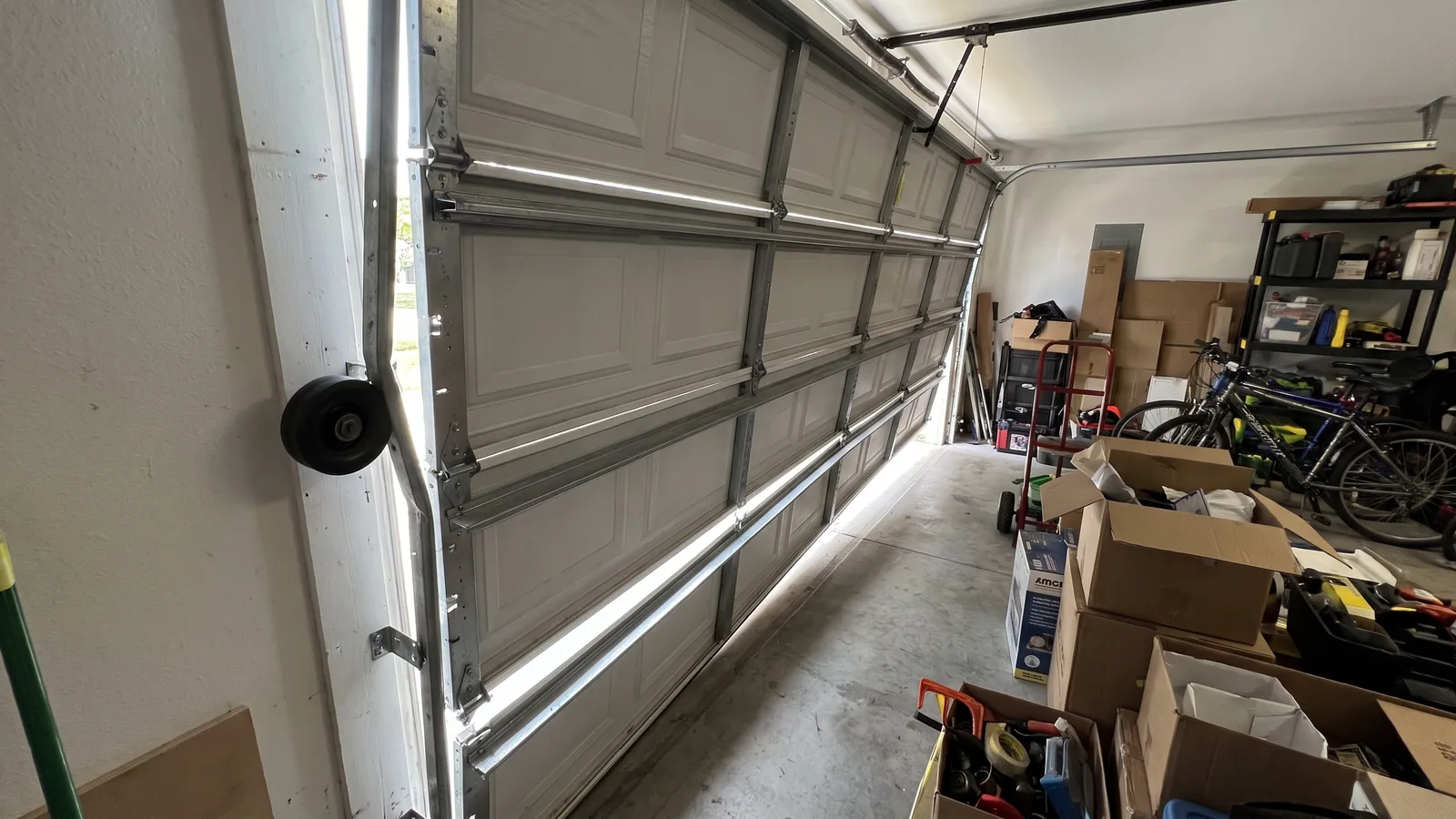
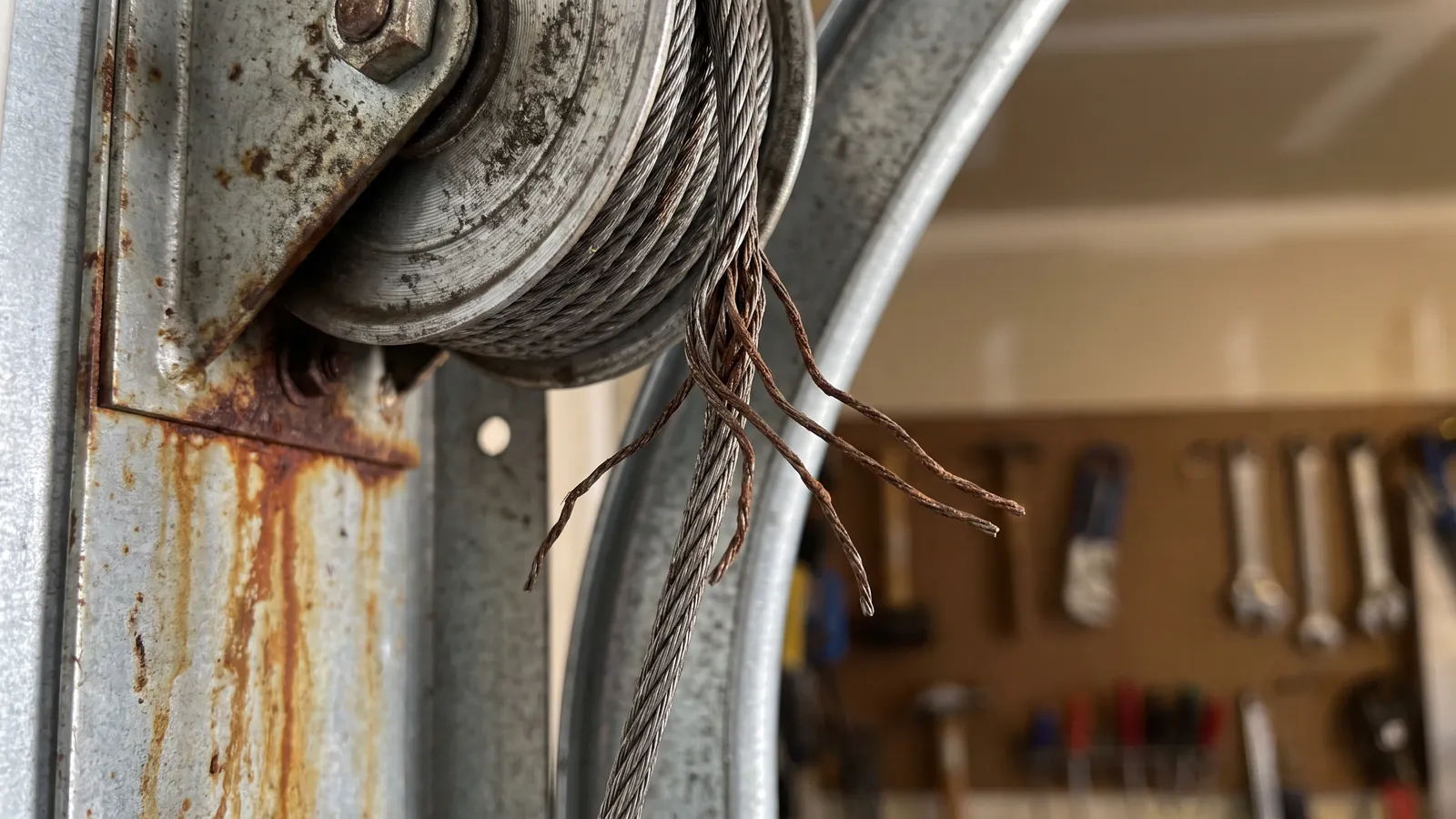
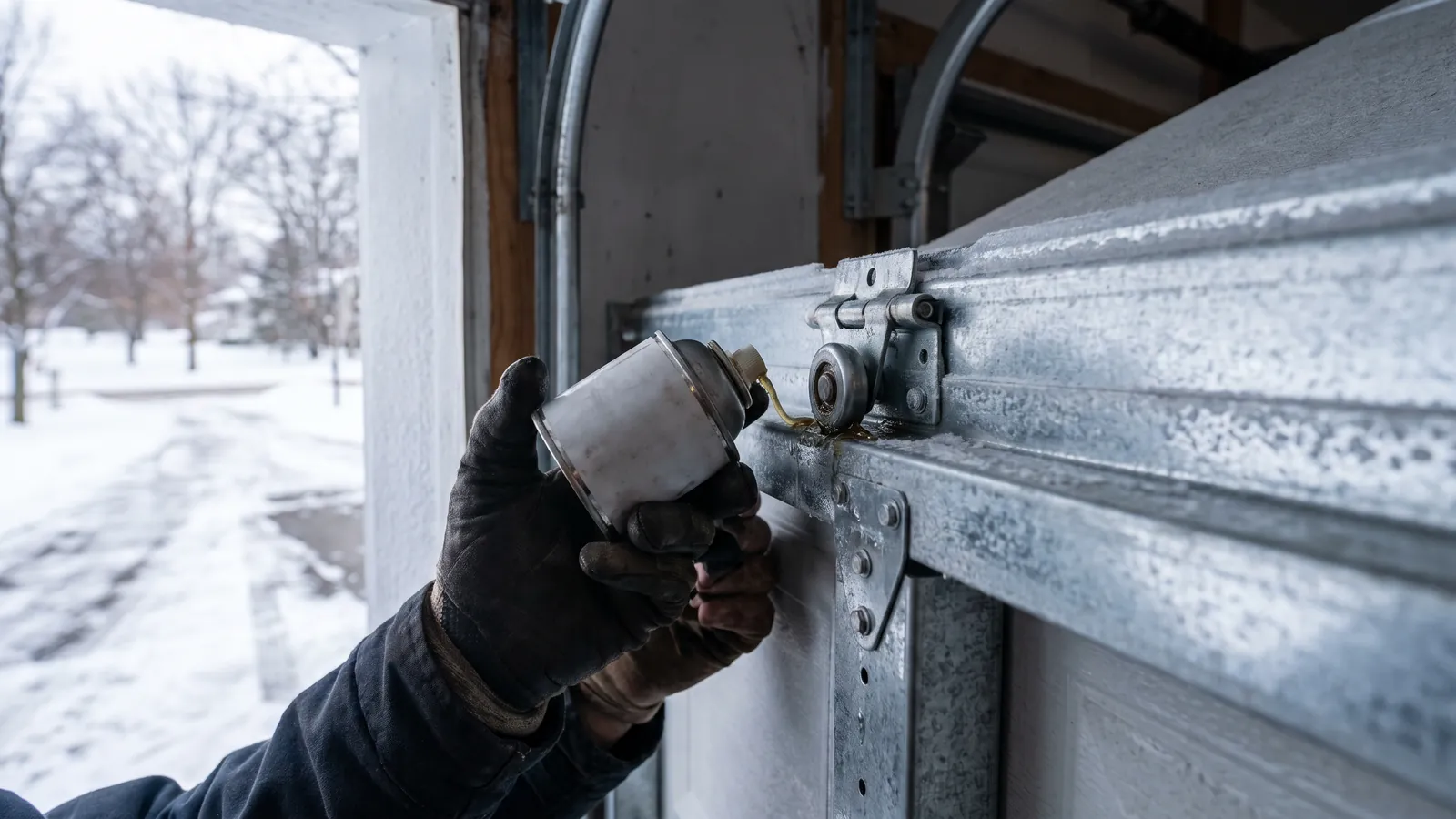
How doors come off the rail around here is fairly predictable. The commonest cause is impact: somebody reverses a few inches too far, a trailer hitch catches a panel, a wheelie bin gets left under a closing door. The second is a cable or spring failure, where the door suddenly loses support on one side and drops at an angle, dragging rollers out as it goes. The third is slow and avoidable — worn rollers and loose rail brackets, where the door has been rattling for a year and finally a roller with no stem left wanders out of the rail on its own.
Whatever the cause, the picture is the same: the door sits crooked, one side higher, often with a panel visibly kinked where it has twisted, and the rail bowed outward where the roller forced its way out. At this point the door is holding itself up through friction and luck, and the most important thing to do is nothing. Do not run the opener to "see if it still works". Every attempt bends more rail, scores more panel, and raises the risk of the door coming down with nothing holding it.
The repair is methodical. The door is first secured with clamps beneath the rollers so it cannot drop while anybody is working underneath it. Tension comes off the system. The affected section is eased back into alignment, rollers are refitted — usually replaced, because a roller that has been out of a rail is normally damaged — and the rail itself is assessed. Mild bowing can be dressed back true; a rail that has been kinked or creased gets replaced, because a straightened crease never runs smoothly and the door will simply find its way out again. Then the drums and cables are reset so both sides wind evenly, the hinges and bottom brackets get checked for the cracks that impact causes, and the door is run by hand through its whole travel before the opener is reconnected and its force settings reset.
The honest part of this job is panel damage. A door that has twisted badly often has a section that is bent beyond use even once the rail is fixed. We will tell you whether a single panel swap is realistic on your model, or whether the sensible money goes toward a new door instead of patching a door that was already tired.
What's included
Secured before anything else
Clamps under the rollers take the weight so nothing can drop while the door is being worked on.
Rollers replaced, not just refitted
A roller that has been out of the rail is almost always damaged. Putting it back is how doors come off twice.
Rail assessed honestly
Mild bowing is dressed true; a creased or kinked rail is replaced, because a straightened crease never runs clean.
Drums and cables reset
Even winding on both sides is what stops the door climbing crooked and finding its way out again.
Hinges and brackets checked
Impact cracks hinges and bottom brackets, and a cracked bracket under cable tension is the next failure.
Opener recalibrated
Force and travel limits reset after the door runs freely by hand, so the motor is not pushing through a bind.
Off-track door repair prices on the Kansas side
| Job | Typical price | Notes |
|---|---|---|
| Door reset on the rail | $165 – $380 | Rollers refitted, alignment restored, balance checked |
| Reset with nylon roller set | $260 – $470 | Quieter, and the usual recommendation |
| Single rail section replaced | $220 – $430 | Vertical or curved section, per side |
| Both vertical rails replaced | $380 – $720 | After a significant impact |
| Reset with cable and drum work | $290 – $560 | When the cause was a cable failure |
| Hinge and bracket replacement | $95 – $260 | Per set, where impact has cracked them |
| Emergency off-track call-out | $290 – $620 | Includes the stated after-hours fee |
| Door secured, repair next day | $95 – $185 | When a rail or panel has to be ordered |
These are 2026 ranges for the Kansas side of the metro, to give you a figure to plan around. What you pay is agreed in the driveway before work starts, with parts and labour listed separately; new doors and openers get a written figure that holds for 30 days.
Recent work
Questions we get about off-track door repair
Can I push it back into the rail myself?
Please do not. The door is under spring tension even when it looks slack, and the moment a roller re-enters the rail that tension can move the door fast. People lose fingertips to this exact job. It also rarely holds — without resetting the drums and cables the door comes straight back out, usually with more damage than before.
How quickly can you come?
Same day. An off-track door is on the urgent list with broken springs and trapped cars, because it is genuinely unsafe and because every hour it sits crooked is more weight resting somewhere it should not be.
Will the door still be usable afterwards?
In most cases yes. Rollers, rail sections, hinges and brackets are all replaceable, and a door that came off cleanly runs fine once everything is true again. The limiting factor is panel damage — if a section is badly twisted, you are choosing between a panel swap and a new door, and we will give you the cost of both.
What usually causes it?
Reversing into the door is the single biggest cause, followed by something left in the opening when the door closed — a bin, a ladder, a bike. After that it is cable and spring failures, which drop one side suddenly. A smaller share are doors where the rollers were simply worn out and nobody noticed the rattling.
Can I claim this on insurance?
Sometimes, if it was a vehicle impact and the damage is substantial. Photograph the door before anyone works on it, including the rail and the panel, and get the written estimate before authorising repairs. We can supply an itemised quote in the form adjusters expect, though whether it is covered is between you and your insurer.
My door came off twice in a year. Why?
Because something underlying was never fixed. The usual culprits are a drum that keeps slipping so the door runs crooked, a rail bracket that has worked loose from the framing, a rail with a crease in it that was straightened rather than replaced, or rollers that were refitted rather than renewed. A proper look at all four should end it.