Motor runs but nothing moves, or nothing happens at all
An opener is a small motor, a drive mechanism and a control board, and each of those three fails in its own recognisable way. Telling them apart is most of the job, and it decides whether you are spending ninety dollars or looking at a replacement.
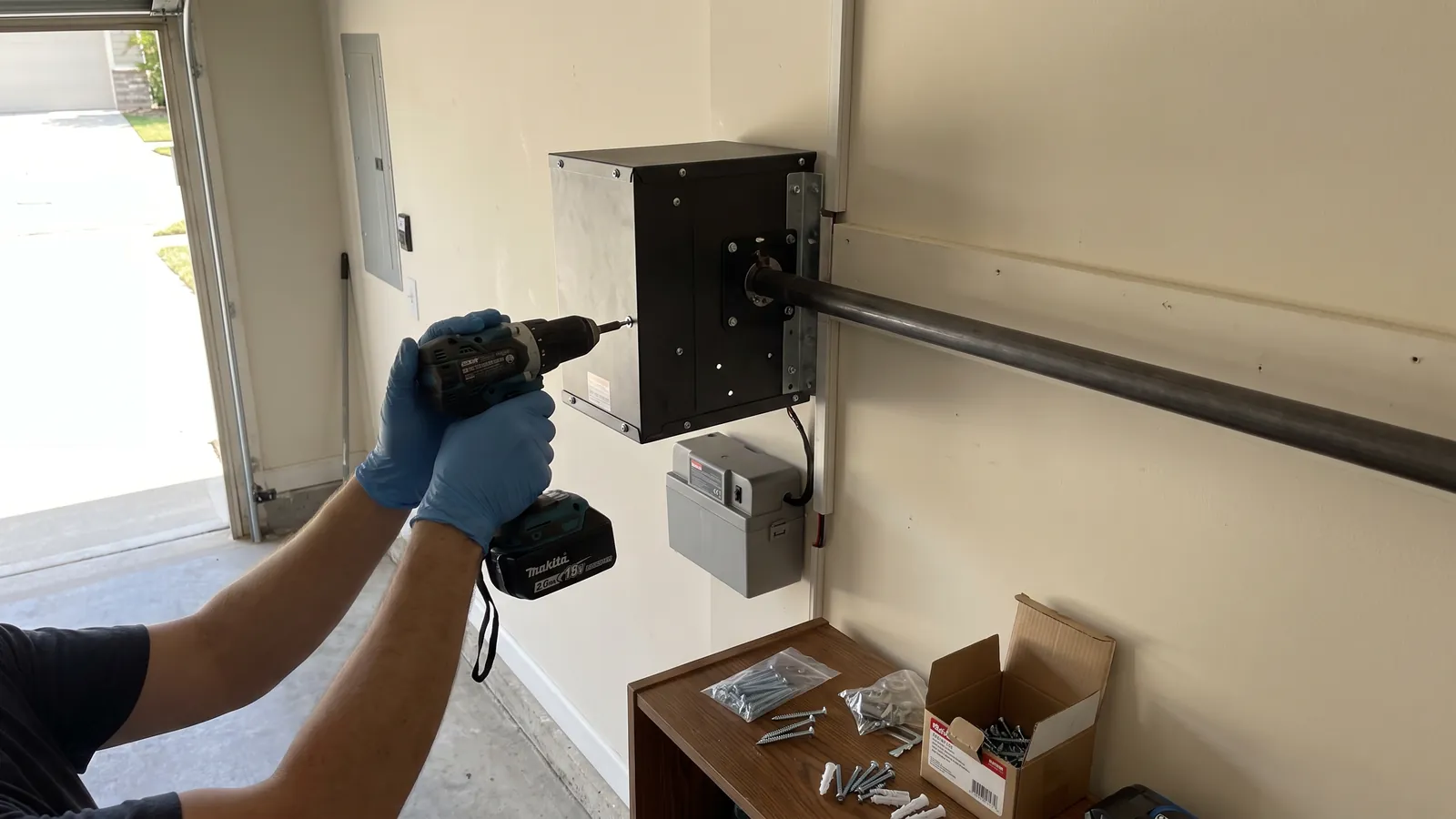
The motor hums or runs but the door does not move. On a chain or belt unit this is nearly always a stripped drive gear — a nylon gear that wears against a worm shaft and eventually rounds off its teeth. It is an inexpensive, satisfying repair on most LiftMaster and Chamberlain units. On an older machine it can instead be the trolley disengaged, which is the release cord left pulled, and costs nothing to put right. And occasionally the opener is fine and a spring has broken quietly, leaving the motor trying to lift a weight it was never meant to lift on its own.
Nothing happens at all. Check the obvious first — a tripped breaker, an unplugged unit, a wall switch that has failed. After that it is usually the logic board or the capacitor. Capacitors are a common, cheap failure and often announce themselves by the motor buzzing without turning. Boards die of age or of a surge; the metro's storm season takes out plenty of them, and a nearby strike or the sharp return of power after an outage is harder on electronics than years of use.
It works from the wall but not the remote. That is batteries, then the remote's pairing, then the receiver. Cold weather is a factor people miss — a battery sitting at 15 degrees in a car overnight delivers much less than it would in July, and a remote that works indoors but not in the driveway in January is usually a tired battery rather than a broken opener.
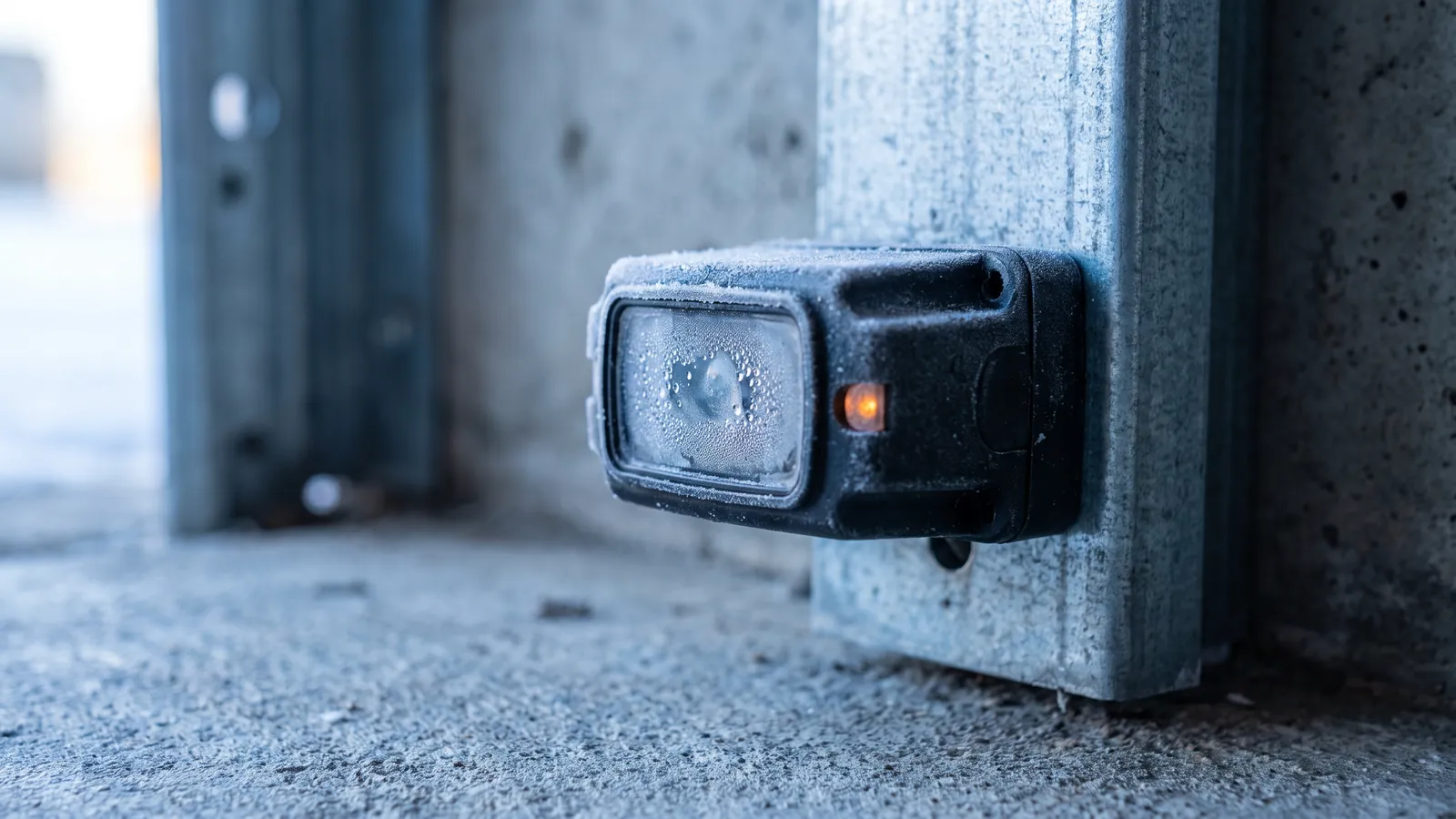
It starts to close and goes back up. Photo eyes, almost always, and in this climate frequently condensation on the lenses rather than an alignment problem. If the eyes are clean and aligned, it is the travel and force settings — a door that has been resprung or has become stiff needs those reset.
What we will tell you honestly is when a repair stops being worth it. On a unit over twelve or fifteen years old, a board replacement often costs a meaningful share of a new opener that would come with a battery backup, quieter running and current safety features. The arithmetic gets laid out and the decision is yours; we fit plenty of boards to older machines for people who would rather spend ninety dollars than six hundred, and that is a perfectly sound choice.
What's included
The fault is found first
Gear, capacitor, board, trolley, limits, sensors or a broken spring — identified before anything is quoted or ordered.
Common parts carried
Gear kits, capacitors, sensors, limit switches and receivers for the brands most houses here run.
Remotes and keypads sorted
Reprogramming, replacement remotes, exterior keypads and the cold-weather battery faults that masquerade as failures.
Travel and force reset
Correct settings so the door closes fully, reverses on obstruction, and the motor is not pushing through a bind.
Safety reverse tested
Every visit ends with the obstruction test, because an opener that will not reverse is the genuinely dangerous fault.
Straight repair-or-replace maths
On an older unit you get the cost of the repair against the cost of a new opener, and no pressure either way.
Opener repair prices on the Kansas side
| Job | Typical price | Notes |
|---|---|---|
| Diagnosis | $69 – $119 | Waived when we carry out the repair |
| Drive gear kit fitted | $140 – $260 | The classic hum-but-no-movement fault |
| Capacitor replacement | $110 – $195 | Often the cause of a buzzing motor |
| Logic board replacement | $180 – $360 | Model dependent; compared against a new unit |
| Limit switch or travel reset | $85 – $160 | Door not closing fully or reversing early |
| Safety sensors, pair | $100 – $200 | Includes alignment and wiring |
| Remote or keypad programming | $55 – $120 | Replacement remotes supplied if needed |
| Trolley or carriage assembly | $150 – $300 | Where the release mechanism has failed |
These are 2026 ranges for the Kansas side of the metro, to give you a figure to plan around. What you pay is agreed in the driveway before work starts, with parts and labour listed separately; new doors and openers get a written figure that holds for 30 days.
Recent work
Questions we get about opener repair
Is it worth repairing an old opener?
Up to a point. Gears, capacitors, sensors and limit switches are cheap and worth doing almost regardless of age. A logic board on a unit past twelve or fifteen years is the judgement call — the part plus labour can reach a third or more of a new opener that brings battery backup and current safety features. You get both numbers and decide.
Why did my opener die after a power cut?
The surge when power returns is often harder on electronics than the outage itself, and the logic board is the most delicate thing in the garage. Boards are replaceable on most units. If it happens to you more than once, a surge protector on the opener circuit is worth more than the repair it prevents.
My remote works inside but not in the driveway. Why?
Usually the battery, especially in winter — cold drops the voltage a remote can deliver, so range collapses while it still works up close. If a fresh battery does not fix it, the next suspects are the aerial wire hanging from the opener, which should hang straight down and not be tucked up, and then the receiver.
Which brands do you work on?
LiftMaster, Chamberlain, Craftsman, Genie, Linear, Marantec, Overhead Door, Wayne Dalton and the rest. We are not affiliated with or authorised by any manufacturer — those are simply the names on the units in people's garages. Parts for older or less common models may take a day or two to come in. See the brand-by-brand page.
The door closes then immediately opens again. Is the opener faulty?
Rarely. That behaviour is the safety system working: either the photo eyes have lost sight of each other, or the door met resistance and the force setting told it to reverse. Wipe both lenses, check the little indicator lights, and look for anything in the opening. If it persists, the travel limits need setting — see sensors.
Can you make an old opener work with my phone?
Sometimes, with a retrofit module, provided the opener has safety sensors fitted — and if it does not, it predates 1993 and should be replaced on safety grounds regardless. For units with sensors, a retrofit is usually cheaper than a new opener. We will tell you which applies to yours.